Schlagwort: Magie

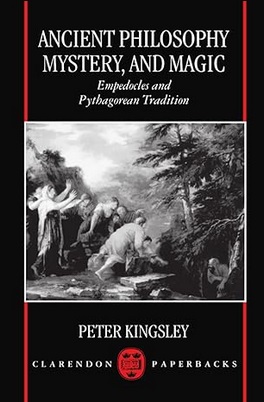
Peter Kingsley: Ancient Philosophy, Mystery, and Magic – Empedocles and Pythagorean Tradition (1997)

The flow of magical tradition via the Pythagoreans and Empedocles into Near East

This book is very, very worth reading despite certain shortcomings. It starts with realizing that Empedocles was rather a magician and healer than a teacher and philosopher in our modern, rational understanding. Empedocles was deeply rooted in the Pythagorean tradition with all its partly forgotten mystery and magic, and deeply rooted in the mythologies and geo-mythological circumstances of Sicily and the Phlegraean Fields. Orphic poems (Zopyrus, Philolaus, Archytas) and gold plates are closely related to Pythagoreanism. This bigger picture sheds quite a different light than usually known on the achievements of Empedocles and his role in the development of philosophy.

By deciphering the four gods related by Empedocles to his famous four elements, Kingsley unfolds a rich picture of connections and associations in all directions. The streams of fire and water under the earth of Sicily, and the mythological meanings of „craters“ of all sorts, may well indicate that the gods of fire and water are Hades and Persephone, whereas Zeus corresponds to air and Hera to earth. Both are couples by the way, and Kingsley’s view is indeed more convincing than the traditional interpretation of Hades as air (who can believe this?), and Zeus as fire (because of the sun). From Western Greece, the idea that the hell is a burning fire made its career into the Near Eastern religions. And by „planetarizing“ of the traditional view of certain „layers“ of earth and fire under our feet, Philolaus created under Homeric and Babylonian influence the idea of a central fire, thus deviating from geocentrism. Philolaus‘ view became lost again in some later Pythagorean thinkers, and Plato.

As Kingsley demonstrates, Plato has taken over certain Pythagorean and / or Orphic myths and presented them in the framework of his own philosophy. The Phaidon myth reflects quite obviously the geomythology of Sicily and the Phlegraean Fields. Plato did not just invent his myths, as many believe today, and informed his readers correctly about his sources. Plato and Aristotle are depicted as the „protestants of Pythagoreanism“, i.e. skeptic and rational. Even only to get a better understanding of Plato and his context makes this book worth reading.

Via Hellenistic Egypt, the ideas of Empedocles found their way into Near Eastern mythology in form of magical, hermetical, and alchemical texts, and finally made their way into Islamic philosophy and Sufism. It is true that Islamic philosophy sees magical aspects of Empedocles which have been forgotten or misunderstood by the rational Aristotelean tradition in the West, and it is nicely demonstrated how a thin line of Western thinkers reconstructed this lost tradition by contact to the East.

What is more, some Sicilian and Pythagorean ideas came originally from Babylon and were transported by Greek colonists from Anatolia settling in Western Greece. And Pythagoras allegedly studied in Egypt. Also the use of gold plates came from Egyptian traditions, with the Carthaginians, as Kingsley claims. And behind all, there are traces to Asiatic shamanism.

This is only a short outlook on few of the many details and insights this book offers to its readers. The number of substantial and evidence-based statements is high, as well as the number of valuable stimuli, from which you could start research in many directions. You really delve into the atmosphere of the mysterious world of Empedocles and the Pythagoreans in Western Greece, and start to create a first understanding of a lot of connections in the history of ideas of which you even did not know that they could exist.

Criticism

You cannot buy everything what Kingsley writes. Clearly, Kingsley has a point, more than only one point. He is clearly more right than wrong. Especially in the field of Empedocles, Sicily, the Pythagoreans, and their time. The more he steps into the world of magic and away from Sicily, the more speculative and intransparent the picture becomes. But if only 50% of Kingsley’s claims will survive the scrutiny, it will nevertheless be a great book. So, read it!

After realising, that Pythagoreanism is no unique dogmatic teaching, it becomes a big problem where to draw the line between a „real“ Pythagorean, and someone who is only „influenced“ by Pythagoreanism, and by related mystery movements such as Orphism, gold plates, Heraclean cults, hermetism, alchemism, etc. Kingsley demonstrates the problem but does not present a solution. The lines are often too blurred.

Kingsley does not only describe a magical world view but also seems to have a tendency to side with it against rationality. This is not acceptable. It is true that Empedocles was no „pure“ philosopher, or not a „rational philosopher“ at all in his own eyes, yet it is wrong to deny a process of rationalization. It is not necessary that Empedocles as a link in the chain of rationalization was aware of being such a link. Despite the author’s dissent, there was indeed an evolution of rationality. It is natural, that when rationality starts its way in a world of myth, it overcomes myth only step by step, and still works with myth, in an eternal process of progress. Even today, our thought is not fully free from myth, and it never can be. Of course, the boundaries of myth have been pushed far to the horizon, in our days, but myth is still there.

And it was good that this evolution of rationality happened. Progress in rationality is indeed progress. We clearly have to make this value judgement. Therefore, it was no progress and not good that after Plato and Aristotle Neoplatonists and irrational „thinkers“ like Numenius took over. It does not help that Neoplatonists had a better understanding of some aspects of Empedocles than Aristotle had, and that they partially got this knowledge from a line of tradition parallel to the known rational tradition. One and the same semi-rational attitude means progress when rationality is on the rise, and regression when rationality is stepping back. Although Empedocles may have been equally semi-rational as was Numenius, it is not the same, and Numenius‘ antics were not good.

That late Pythagoreans, Plato, and Aristotle rationalized ancient myths in a wrong way is not the fault of rationality, as Kingsley repeatedly claims, but of a lack of information. Kingsley’s book itself is an example how you can depict things better in a rational way. Plato and Aristotle do not have to step aside with their rationality.

Strange enough, Kingsley, who accuses Plato and Aristotle of having misinterpreted Empedocles because of their rationality, himself misinterprets Plato, obviously because he is at odds with rationality: It is clearly wrong that the line between logos and mythos is blurred in Plato’s dialogues. Contrary to this erroneous opinion, held by many contemporary scholars, logos and mythos are very sharply separated in Plato’s works. They are combined but never mixed. And how can Kingsley who clearly realized that Plato did not just invent his myths, draw an analogy of the creator of the universe and Plato as the creator of myths, and cite Luc Brisson? It would have been helpful to outline the difference between mythos and myth, but Kingsly does not discuss this basic problem. Furthermore, it does not help that Kingsley sees irony everywhere in Plato’s works where there is none. So many mistakes in interpreting Plato are built upon the „feeling“ of irony. Kingsley really could have done better. Does Kingsley have a pathological strive for the irrational? In these passages about Plato’s myths, Kingsley’s book is a superfluous repetition of academic postmodern commonplace errors.

Furthermore, the author is too skeptical towards established science. Of course, academics have made and still make many things wrong. But they are more open for alternative ideas than many think. The author should have tried to build some golden bridges to come together. But maybe the stubborness of established academia is felt more deeply if you depend on it to make a living?

Partly, the style of writing as a story of discovery became boring after a while. A more straightforward and ordered presentation of the material sometimes would have been more helpful. But in any case, you have to make your own notes when reading such a book. Do not read this book without!

Finally, I clearly do not like the bad image of Cicero depicted by Kingsley. Plato, Aristotle, and Cicero have to be praised in the first place, whereas the irrational radicalism of „thinkers“ such as Numenius has to be put under scrutiny.

Bewertung: 4 von 5 Punkten.

(Erstveröffentlichung auf Amazon am 14. November 2017)

Daniel Kehlmann: Beerholms Vorstellung (1997)

Gesellenstück eines Schriftstellers

In „Beerholms Vorstellung“ übte sich der 22jährige Daniel Kehlmann daran, seinen Stil und seine Themen zu finden, mit denen er als Schriftsteller Erfolg haben würde. Vieles wird man in seinen späteren Werken in verwandelter Form wiedererkennen. Die einzelnen Miniaturen sind bereits sehr gelungen, doch es fehlt noch der große Zusammenhang. Der rote Faden der Geschichte erscheint nicht zwingend und entwickelt sich jeweils überraschend, eben experimentell, und dabei noch ohne den richtigen Ernst, den ein 22jähriger wohl auch noch nicht hat.

Kehlmann gelingt es, typische Erfahrungen ironisch einzufangen und zum Thema zu machen, die den Leser sagen lassen: Ja, genau so, genau so habe ich es auch schon erlebt und empfunden, und genau so sollte man auch darüber lachen. Auch das Verschwimmen von Realität und Traum ist hier schon perfekt gelungen.

Auch die für Kehlmann typische Skurrilität der Geschichte und ihrer Personen ist schon angelegt: Es geht um einen jungen Mann, der sich von der Metaphysik der Mathematik dazu verleiten lässt, Theologie zu studieren, bis sich sein Talent zur Zauberei Bahn bricht. Schließlich zerfließen die Grenzen zwischen Wahn und Wirklichkeit, und das Ende ist tragisch.

Ein Thema ist die Unfähigkeit des Protagonisten, zu sich selbst zu finden, und nie bei dem bleiben zu können, was er ist und hat. Wohl eher ein Thema für junge Leute wie den Autor, die sich erst noch finden müssen, ebenso wie das Thema Suizid; langfristig ist aber jeder angefragt.

Alles in allem lesenswert, aber kein Muss.

Bewertung: 4 von 5 Sternen.

(Erstveröffentlichung auf Amazon am 03. März 2015)

Veronica di Grigoli: Evil Eye (2013)

Great read to get a deep insight into life in Istanbul

Celeste came to Istanbul to teach English just for one year but makes experiences which will change her whole life: Only step by step she realizes that she has become victim of an evil plot against her life, involving magic and the furor of a woman fighting for a man. With good friends and a good sense of humour she overcomes all perils and is able not only to save her own life but also the life of a mysterious boy living in an orphanage.

By living in a household of a rich Turkish family, Celeste is compassionately involved in culture and society of the country. Be it richness and poorness, the Turkish ideas of the relationship of the sexes, magic and superstition as well as freemasonic enlightenment, the morbid beauty of Istanbul, or stories from Istanbul’s rich history as well as from Turkish tradition (such as Nasreddin Hoca or the sultan’s harem): Celeste experiences this all with critical openess and brings joy and love into the life of others, finding love herself, in the end.

Definitely a book which deserves a good publisher and many readers!

Bewertung: 5 von 5 Sternen.

(Erstveröffentlichung auf Amazon am 29. März 2014)

Apuleius: Der goldene Esel (2. Jhdt. n.Chr.)

In die Vollen des antiken Alltagslebens gegriffen

Der Goldene Esel des Apuleius (auch bekannt als: Metamorphosen) ist ein Stück antike Unterhaltungsliteratur, die uns auch heute noch bestens amüsieren kann. Mit Witz und Ironie wird eine Abenteuergeschichte erzählt, die weitere Erzählungen und Anekdoten in sich einschließt, darunter auch so bekannte Erzählungen wie die von Amor und Psyche.

Der Leser erhält Einblick in das Denken und Leben antiker Menschen im 2. Jahrhundert n.Chr. Ob Handel, Handwerk, Reisen und Erotik, ob Geizhälse, Räuber, Frauen und Mägde, ob Zauberei und Isis-Kult – man kommt voll auf seine Kosten.

Wegen der Erzählkunst des Autors, und wegen der tiefen Einblicke in die antike Welt wird dieses Kleinod mit gutem Grund zur Weltliteratur gezählt.

Die kostenlose Kindle-Ausgabe der Übersetzung von August Rode 1920 ist erfreulich fehlerfrei und akzeptabel lesbar.

Bewertung: 5 von 5 Sternen.

(Erstveröffentlichung auf Amazon am 28. September 2013)

Gabriel García Márquez: Hundert Jahre Einsamkeit (1967)

Das Epos Lateinamerikas

Der Roman „Hundert Jahre Einsamkeit“ von Gabriel Garcia Marquez aus dem Jahr 1967 ist ein wahres Epos: Es ist nicht nur eine Geschichte, sondern die Geschichte aller Geschichten, eine Erzählung, die eine ganze Welt umgreift und in Worte fasst. Es ist die Welt Lateinamerikas um 1850-1950 und ihr Lebensgefühl.

Der Roman entfaltet sein Panorama anhand der Geschichte der Familie Buendía über mehrere Generationen hinweg. Am Anfang steht die Gründung des Ortes Macondo, der klein und beschaulich ist, ohne Kontakt zur Außenwelt, der nur von Zigeunern besucht wird. Nach und nach ziehen Staat und Kirche ein, dann kommt ein immer wieder aufflammender Bürgerkrieg zwischen „Liberalen“ und „Konservativen“, dann kommen italienische Tanzlehrer und französische Huren, dann eine ausbeuterische Bananengesellschaft und die Eisenbahn, Streiks und Erschießungen von Arbeitern, schließlich die Mode der 20er Jahre, das Motorrad und (fast) das Flugzeug. Die Geschichte der Buendías wiederholt sich in jeder Generation auf immer gleiche und doch immer wieder andere Weise. Verwirrenderweise wiederholen sich auch die immergleichen Namen: Aureliano, José Arcadio, Amaranta, Remedios, usw. Der Eindruck eines ewigen Kreislaufes entsteht, von Streben und vergeblicher Hoffnung, von Verrücktheit und Genie. Der Roman enthält zahllose „running gags“, die immer wieder und wieder vorkommen. Der Roman hat Züge eines psychedelischen Flusses, der rauschhaft vor den Augen des Lesers vorübergleitet.

Zum Lebensgefühl Lateinamerikas scheint auch der Aberglaube als fester Bestandteil zu gehören. Er wird in diesem Roman durch diverse übernatürliche Phänomene repräsentiert, die als faktische Gegebenheiten ohne weiteres in die Handlung eingebaut werden. Dazu gehören die Geister von Verstorbenen, Vorahnungen, Telepathie, die Levitation eines Priesters, Gegenstände, die im Haus umherwandern, Vieh, das besonders fruchtbar ist, je mehr Sex seine Besitzerin hat, oder jahrelanger Dauerregen, und ein Zimmer, in dem die Zeit stehen zu bleiben scheint – aber nicht für jeden. Dazu gehören auch Menschen, die über 100 Jahre alt werden und über mehrere Generationen im Leben mitmischen, und eine Schönheit in edler Einfalt, die der Oberst für die klügste von allen hält, weil sie ein vernünftiges Verhältnis zur Sexualität hat, und die leibhaftig in den Himmel auffährt. Diese Vorkommnisse sind aber nicht plakativ „esoterisch“ aufgebauscht, sondern zur Gesamtatmosphäre passend in die Handlung eingewoben.

Zu diesen übernatürlichen Phänomenen gehört insbesondere auch der Zigeuner Melquiades, der Alchemie, antike Texte und geheime Manuskripte nach Macondo bringt, und eine Prophezeiung über die Zukunft der Familie Buendía ausspricht. Und natürlich der „weise Katalane“, der eine Buchhandlung für seltene Bücher im Ort eröffnet, die am Ende des Romans zur Entzifferung der Manuskripte des Melquiades und seiner Prophezeiung gebraucht werden, woraufhin der Ort Macondo der endgültigen Zerstörung anheim fällt.

Sexualität wird in diesem Roman vorwiegend derb gelebt. Liebe im eigentlichen Sinne kommt zwar vor, aber selten. Es mag dem Milieu entsprechen, aber man hätte sich etwas mehr Kritik gewünscht, und sei es nur durch Ironie. Es ist so ziemlich alles dabei: Angefangen von Männern, die Hausmägde schwängern und dann verlassen, über Zweitfrauen und Scheinehen, über Mütter, die ihre Töchter dem berühmten Oberst wie einem Zuchtbullen zuführen, über ständig vorkommende Prostitution, die vom Autor immer wieder als heilsam und hilfreich gezeichnet wird, über hin und wieder vorkommende Inzucht, über die Andeutung eines Päderasten, bis hin zu Beziehungen, die allein auf rauschhaftem Sex gegründet sind.

Ein Grundthema des Romans, das allerdings immer nur angedeutet und nie zu größeren Höhen der Einsicht geführt wird, ist die Einsamkeit, das Scheitern der Hoffnungen und die Sinnlosigkeit, schließlich das Warten auf den Tod. Dabei die ewige Wiederholung des Immergleichen. Obwohl meistens recht heiter, durchzieht ein melancholischer Grundton das Buch.

Der Schluss des Romans ist etwas seltsam: Für Sippen, die zu hundert Jahren Einsamkeit verdammt waren, so heißt es, gibt es keine zweite Chance. Damit schneidet der Roman seine Verbindung zur Gegenwart ab, und lässt auch keinen Raum für eine bessere Zukunft. Der Roman beschreibt, was geschieht, gibt aber keine Ratschläge und vermittelt keinen Sinn.

Nebenbei:

Der Autor des Romans war Unterstützer diverser kommunistischer Regime. Davon ist im Roman aber kaum etwas zu merken. Eine leichte Sympathie für die „Liberalen“ hat damit nichts zu tun. Im Roman sind „Konservative“ und „Liberale“ gleichermaßen albern. Auch die Bananengesellschaft der „Gringos“ wird zumindest nicht auffallend für ein antiamerikanisches Ressentiment ausgeschlachtet.

Unter den Manuskripten des Melquiades sind auch die Texte von Hermann dem Lahmen, einem Mönch von der Insel Reichenau („damit er das Astrolabium, den Kompass und den Sextanten bedienen konnte“).

Die Neuübersetzung von Dagmar Ploetz erweist sich als sehr gelungen. Als Vorleser hat Ulrich Noethen komplett überzeugt.

Bewertung: 5 von 5 Sternen.

(Erstveröffentlichung auf Amazon am 21. November 2018)